
A successful powder grinding production line is not confirmed by test fineness alone. In real production, the line also has to fit the buyer’s building, utility supply, dust collection route, material transfer path, cleaning method, and maintenance space. A machine that performs well in a test center can still become difficult to install if the factory layout is reviewed too late.
Many buyers compare mill models first, then ask about layout after the quotation is nearly finished. That sequence creates avoidable risk. Factory layout should be checked before the final quotation because it affects equipment height, platform design, compressed air demand, filter position, duct routing, electrical scope, installation access, and commissioning time.
This checklist is written for plant engineers, procurement teams, distributors, and project owners preparing to buy a powder grinding or classification line. It explains what to review before ordering and what information Mills Powder normally needs before recommending a complete system configuration.
Quick Answer
- Confirm factory dimensions, ceiling height, door size, installation route, and maintenance access before approving the final layout.
- Review utilities early, especially compressed air for a jet mill system, power supply, dust collection, ventilation, and instrument air.
- Separate feed rate, qualified product rate, oversize return, and collection losses when checking whether the line can fit the plant.
- A layout should show more than the main mill. It should include feeder, classifier, cyclone, bag filter, fan, controls, ducts, discharge valves, platform, and packaging route.
- Sample testing is useful, but final ordering should also confirm site conditions and the buyer's installation responsibilities.
Why Layout Should Be Checked Before Quotation
A quotation for a powder grinding production line often begins with material name, target particle size, and capacity. Those inputs are necessary, but they do not define whether the equipment can be installed and operated safely inside the buyer’s plant.
For example, a jet mill may fit the particle size target, but the site may not have enough compressed air capacity. An air classifier may control the top cut, but the planned filter position may make ductwork too long or difficult to clean. An impact mill may match the capacity target, but maintenance doors, platforms, or bag-filter clearance may not fit the room. These issues change the real project scope.
Buyers evaluating a jet mill system, AF air classifier, or air classifying impact mill should therefore treat layout review as part of technical selection, not as an after-sales drawing step.
Layout Items to Confirm Before Ordering
The table below can be used before the buyer requests a final quotation or signs off on a layout drawing. It is not a substitute for engineering design, but it helps identify the data a supplier needs before committing to a system boundary.
| Layout item | What the buyer should check | Why it matters in production |
|---|---|---|
| Building space | Room length, width, ceiling height, column position, floor loading, door size, and crane or forklift access | The main equipment may fit on paper while the cyclone, filter, platform, or maintenance space does not fit in the real room. |
| Material route | Raw material storage, feeding height, transfer distance, packaging route, and batch or continuous operation | A poor material route increases manual handling, dust leakage, cleaning time, and operator workload. |
| Utilities | Power voltage, connected load, compressed air, cooling water, instrument air, grounding, and available cable routes | Utilities often decide whether a lab result can be converted into a stable production line. |
| Dust collection | Cyclone, bag filter, fan position, duct length, discharge valves, emission requirement, and housekeeping method | Fine powder recovery and plant cleanliness depend on the full collection route, not only on the mill. |
| Maintenance access | Access around bearings, classifier wheel, nozzles, liners, filter bags, valves, motors, and control cabinet | If service access is too tight, routine cleaning and spare-part replacement become slow and expensive. |
| Safety and environment | Ventilation, noise, explosion or inert-gas review where relevant, operator walkway, and emergency access | Safety requirements can change equipment layout, controls, interlocks, and installation scope. |
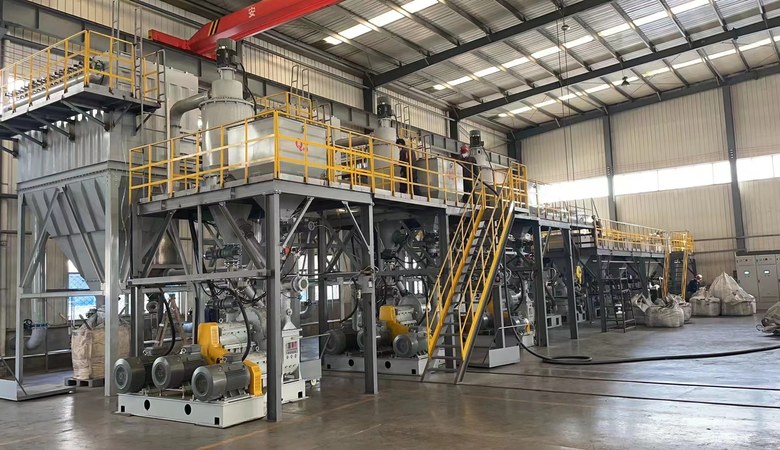
Compressed Air Power and Dust Collection
Utilities should be discussed before the buyer compares final prices. A jet mill depends on compressed air or process gas. If the plant cannot supply stable air pressure, air volume, and dryness, the final particle-size distribution and capacity may not match the test condition. In some projects, compressed-air supply is the limiting factor, not the mill body.
Air classification and impact milling have different utility questions. A classifier needs stable airflow, fan duty, and collection design. An impact mill needs power, cooling review where relevant, feeding stability, and dust collection that can handle the generated fines. When a process includes grinding and classification, the supplier should define which fan, cyclone, filter, rotary valve, duct, and control items are included.
Mills Powder’s related guide to air classification system specifications uses the same principle: define the complete system scope before comparing prices. A low quote can become expensive if the buyer later discovers that platforms, controls, filters, valves, or installation support were excluded.
How Test Results Connect to Factory Layout
Material testing answers one set of questions: whether the powder can reach the target D50, D90, D97, top cut, capacity direction, and product behavior under controlled test conditions. Layout review answers a different set of questions: whether the buyer’s site can support the system needed to reproduce that result.
When a material is new or quality-critical, Mills Powder may recommend using laboratory equipment or pilot testing before production selection. The test report should then be translated into a production specification that includes equipment model, airflow, feed method, collection route, controls, utilities, cleaning access, and layout assumptions.
If no test is available, the layout should be marked as preliminary. A drawing based only on a material name and target mesh size may miss important behavior such as agglomeration, moisture, low bulk density, heat sensitivity, abrasiveness, or poor flowability.
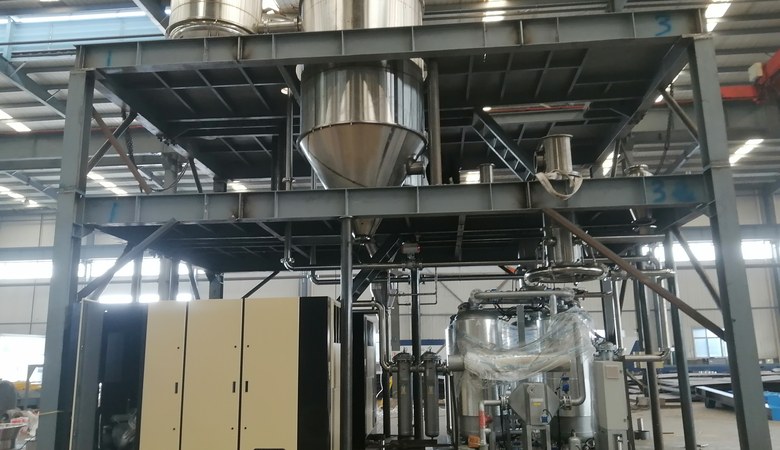
Common Layout Mistakes
- Checking only the main mill footprint and forgetting cyclone, filter, fan, platform, ducts, and packaging space.
- Assuming compressed air is available without confirming pressure, air volume, dryness, and operating cost.
- Placing the dust collector where filter-bag replacement, discharge, or inspection is difficult.
- Ignoring cleaning access when the plant handles multiple materials or frequent grade changes.
- Comparing supplier quotations before confirming which installation materials, electrical items, and controls are included.
- Approving a line layout before confirming how operators will feed, sample, collect, pack, and maintain the system.
What to Send a Supplier
Before asking for a final layout and quotation, prepare the material name, feed size, target D50/D90/D97 or mesh, required feed rate and qualified product rate, moisture, bulk density, hardness or abrasiveness, temperature sensitivity, contamination limits, and application. Add factory drawings, room dimensions, photos, ceiling height, door size, voltage, compressed air data, dust-emission requirements, and preferred packaging route.
A supplier can make a better recommendation when engineering and procurement teams share the same basis. The quotation should state what is included, what remains the buyer’s responsibility, which assumptions depend on testing, and what must be confirmed during installation.
FAQ
Is factory layout needed before sample testing?
Basic layout information is useful before testing, but a detailed final layout usually comes after the test result or process route is clearer. At minimum, tell the supplier about available space, utilities, and any site limits before the test is interpreted for production scale.
Why does compressed air matter for jet milling?
Jet milling uses compressed air or process gas to accelerate particles. Air pressure, air volume, dryness, and supply stability affect grinding energy, capacity, and classification behavior, so they should be checked before ordering a production jet mill line.
Can one layout support several powder grades?
Sometimes, but the layout must allow cleaning, sampling, spare-part access, and possible parameter changes. If materials have different contamination or safety requirements, the same line may need additional cleaning or separation measures.
What makes powder production line quotations different?
Quotations vary because suppliers include different scopes. One quote may include only the main mill, while another includes feeder, classifier, cyclone, filter, fan, controls, platform, installation guidance, spare parts, and commissioning support.
What should I do if my factory space is limited?
Send the supplier room dimensions, photos, door size, ceiling height, column location, and utility positions. The process route may need a compact layout, different equipment arrangement, or phased confirmation before final ordering.
Engineering Summary
- A powder grinding production line should be selected with both process data and factory layout data.
- Compressed air, power, dust collection, ventilation, access, and packaging route can change the final system scope.
- Sample testing supports equipment selection, but it does not replace site review for installation and operation.
- A reliable quotation defines the complete system boundary and separates confirmed evidence from layout assumptions.
Conclusion
Factory layout is part of powder process selection. Before buying a grinding or classification line, confirm whether the selected equipment can fit the plant, connect to available utilities, collect powder cleanly, support maintenance, and match the test basis used for quotation.
If you are planning a powder grinding production line, contact Mills Powder with your material data, target particle size, required capacity, site photos, factory dimensions, utilities, and layout constraints. The engineering team can review whether a jet mill, air classifier, impact mill, laboratory test, or combined system should be evaluated first.