
Introduction
A published reference project can help a recovered-carbon buyer ask better questions, but it cannot select a line by itself. Pyrolysis carbon black can vary with feedstock, pyrolysis conditions, ash, moisture, agglomeration, contamination and downstream use. A reported mesh size and hourly rate are therefore inputs for scoping a test and RFQ—not a transferable performance guarantee.
For example, Mills Powder has authorized references for pyrolysis carbon black deep processing. This article explains how to read those references without overextending them, then turn the useful details into a material-specific test and system-boundary request.
The practical goal is not to dismiss a useful case study. It is to separate the facts that travel with the reference from the facts that still need confirmation. That distinction helps a buyer avoid comparing unlike materials, protects the test plan from vague assumptions, and makes the eventual equipment discussion more specific.
Quick Answer
- A reference project is a scoping input, not a transferable equipment guarantee.
- Compare feed condition, PSD definition, capacity basis, collection boundary and downstream requirement before comparing headline numbers.
- Use a representative sample and stated acceptance method before final model selection or production commitment.
What a Reference Project Can and Cannot Tell You
A reference is valuable when it identifies the material, stated feed condition, product requirement, process scope and measurement language. It is not evidence that another recovered-carbon feed will behave identically. The most useful comparison asks whether the new project has comparable feed size, moisture, ash, flow behavior, target particle-size distribution and collection requirement.
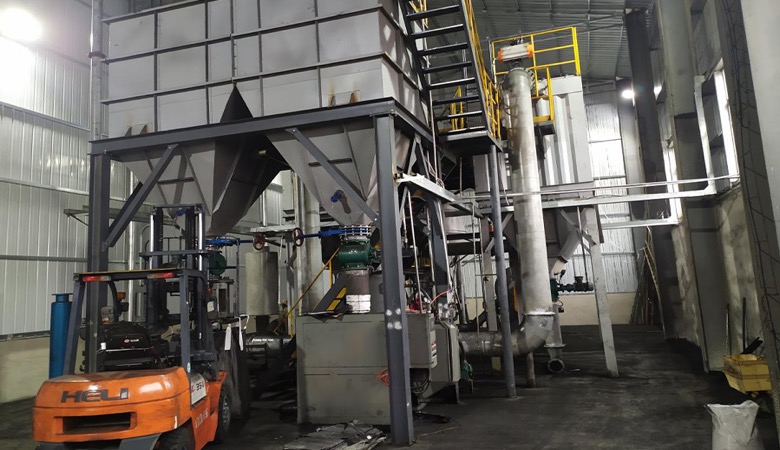
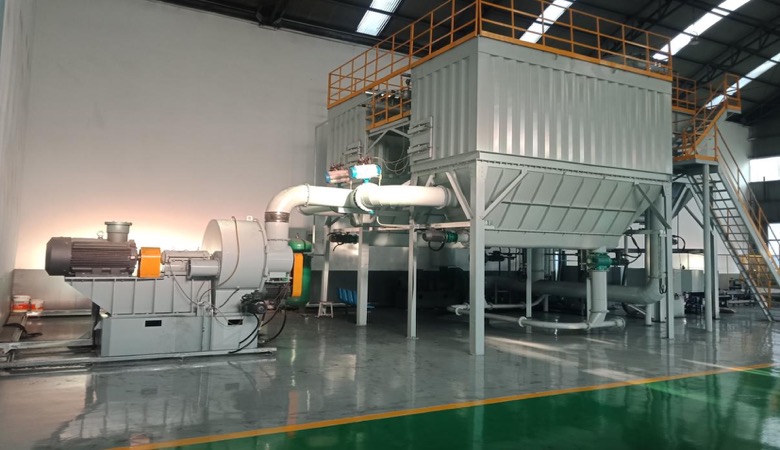
The authorized Hubei reference reports pyrolysis carbon black below 5 mm processed to a reported 500-mesh product at 2,000 kg/h. The authorized Shandong reference reports feed below 5 mm, D100 below 45 μm and 2,500 kg/h. These are individual reported project records. Neither establishes a catalogue capacity, a universal mesh-to-micron conversion, or a quality guarantee for a different feed.
Compare the Inputs Before Comparing the Numbers
“500 mesh” and “D100 below 45 μm” do not state the same requirement. A buyer should preserve the original measurement language, identify the test method and ask whether the commercial acceptance criterion concerns D50, D90, D97, D100, sieve residue, dispersion or another property. Converting a reference figure into a generic micron promise removes information that is needed for selection.
Capacity needs the same discipline. Clarify whether the reported value is feed rate, total system throughput or accepted-product output; whether collection losses are included; and which material state was used. New-project acceptance should also cover material consistency, collection behavior and downstream dispersion rather than only a nominal final size.
A useful comparison record should note what is known and what remains unknown. For instance, an original case may state a headline product size and throughput while not stating the incoming PSD, the moisture test, the definition of acceptable product, or the operating duration. Those omissions do not invalidate the reference. They define the questions that a new buyer needs to answer with their own sample and acceptance plan.
A Practical Reference Comparison Sheet
| Item | Hubei authorized reference | Shandong authorized reference | New-project question |
|---|---|---|---|
| Reported feed | Below 5 mm | Below 5 mm | Is the new feed size and agglomeration comparable? |
| Reported product language | 500 mesh | D100 below 45 μm | Which PSD or sieve method is the new acceptance basis? |
| Reported capacity | 2,000 kg/h | 2,500 kg/h | Is this feed, throughput or accepted-product output? |
| Use of data | Individual reported record | Individual reported record | What must be verified with representative material? |
Choose the Process Question Before the Equipment Name
A buyer who still needs particle-size reduction is evaluating a grinding-and-classification route. In that situation, the Mills Powder Impact Mill product page is a relevant starting point, while an existing Air Classifying Mill Selection guide explains the distinction between integrated impact grinding and a standalone classifier. A buyer who already has ground material and only needs a controlled separation stage may have a different process question.
Do not use a reference to skip system-boundary work. Feeding, grinding, classification, cyclone or filter collection, fan, controls, dust containment and discharge all affect whether an apparent equipment comparison is meaningful. The scope should be written before a supplier is asked to quote.
Turn a Reference Into a Test and RFQ Plan
The best next action is to convert the reference into a short, auditable input list. Start with a representative sample and state whether the target is a laboratory result, a pilot decision or a production acceptance requirement. Give the supplier the material identity, origin or process route, safety and handling information, feed-size distribution, moisture, ash or other relevant composition data, target PSD and test method, required output basis, and any contamination or collection constraints.
For a broader checklist on representative material and test conditions, see Powder Sample Testing Before Equipment Selection. The project reference can inform the questions, but the new sample and defined acceptance method must support the final selection.
The RFQ should also say what decision the trial must support. Is the objective to screen feasibility, establish a particle-size method, compare collection options, set a preliminary system scope, or confirm a production acceptance target? Keeping that decision visible prevents a test report from being treated as evidence for claims it was not designed to answer. It also helps both parties distinguish a process discussion from a fixed-performance quotation.
When a Reference Is Not Enough
Pause before using a reference as a design basis if the new feed differs materially in moisture, ash, agglomeration, contamination, flowability or downstream specification; if the particle-size method is unknown; or if “capacity” has no stated basis. These are data gaps, not reasons to assume a better or worse result.
The same caution applies to safety, emissions, utilities and site layout. This article does not provide safety certification, emissions compliance, process-hazard analysis, energy consumption, purity, yield or guaranteed capacity. Those requirements need project-specific engineering review and appropriate local compliance work.
If a benchmark is still useful but the inputs are incomplete, label it as a directional reference and preserve the missing fields in the discussion. That is more credible than filling the gaps with assumed conversion factors, inferred output rates or unsupported quality claims. A transparent gap list gives the buyer a practical next step: collect the missing material data or run a representative test.
FAQ
Can I use a published carbon-black reference to specify a machine model? Not by itself. Use it to frame comparable inputs, then test representative material and define the acceptance method and system boundary.
Does a mesh value equal a D100 value? No. Keep the original measurement language and test method. Mesh, sieve residue and laser-diffraction percentile values answer different questions unless a project-specific correlation is established.
What should capacity mean in an RFQ? State whether it means feed rate, total system throughput or accepted-product output, plus material condition, target PSD, test method and collection boundary.
Should an air classifier be quoted with a grinding system? It depends on the buyer task. A standalone classifier may fit an already-ground feed; an integrated impact mill route may fit projects that still need fine grinding and internal classification.
Engineering Summary
Authorized pyrolysis-carbon-black references provide useful project-specific anchors, not universal specifications. Preserve each reference’s material, size language, capacity basis and process boundary. Then use representative testing and a defined acceptance plan to decide whether an impact-milling, classification or combined process should be evaluated.
Conclusion
If you are evaluating a pyrolysis carbon black grinding line, begin with the material you actually have—not a borrowed headline number. Review the authorized pyrolysis carbon black project cases, then contact Mills Powder with feed condition, target PSD and test method, output basis, required capacity, quality constraints and site utilities. The next engineering step is to decide what needs to be tested and what the system quotation must include.