
In my years of working with powder processing customers around the world, one question comes up again and again:
“Which air classifier should I choose for my jet mill?”
Many customers focus first on the jet mill itself — the power, the capacity, the fineness.
But over time, I’ve learned something simple but critical:
The classifier isn’t just an accessory. It’s what decides whether your powder is consistent or chaotic.
If your jet mill is the heart of your system, the air classifier is the brain.
It determines how stable your particle size is, how efficient your energy use is, and how smooth your production runs.
Why the Classifier Matters
An air classifier uses the balance between centrifugal force and air drag to separate particles according to their size and density.
Smaller particles are carried by the airflow through the classifier wheel and collected as fine powder, while larger particles are rejected and returned for further grinding.
The key objectives of air classification are:
Achieve narrow particle size distribution (PSD) for consistent product performance.
Enhance process efficiency by reducing overgrinding.
Stabilize downstream processes, such as coating, sintering, or mixing.
Improve product yield through precise control of cut size (d97, d50).
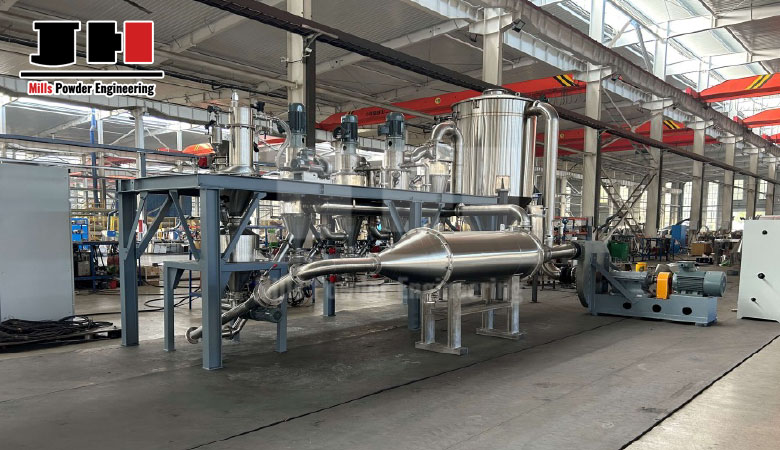
In jet milling systems, the air classifier is integrated directly with the grinding chamber, creating a closed-loop system that continuously separates fine particles during milling – ensuring high efficiency and steady quality output.
What to Consider When Choosing an Air Classifier
Choosing the right air classifier isn’t about picking the biggest or most expensive model — it’s about finding the one that truly fits your material and production goals.
Here are five key factors I always discuss with my customers.
1️⃣ Understand Your Material
Every powder behaves differently in the air stream.
Talc, lithium carbonate, titanium dioxide, and alumina each have unique density, shape, and flow characteristics.
That’s why I often tell customers:
“Your classifier has to understand your material.”
If the system is designed for the wrong flow behavior, no amount of fine-tuning will give you stable results.
2️⃣ Define Your Target Particle Size
Before choosing a classifier, be clear about your target particle size (D50 or D97).
Not every system can stably produce below 5 μm — and it’s not always necessary to go that fine.
Setting a realistic target helps achieve better efficiency, lower air consumption, and consistent quality.
3️⃣ Consider Capacity and Stability
Classifier size, wheel diameter, and rotation speed all influence throughput.
If your production varies, a variable-speed classifier is worth considering — it allows you to fine-tune your cut size without mechanical changes.
This flexibility helps you handle different materials or seasonal variations without losing stability.
4️⃣ Think About Purity and Material Contact
For high-purity applications — like pharmaceuticals, cosmetics, or battery materials — stainless steel (SS316L) or ceramic-lined classifiers are essential.
One of my customers in the cosmetics industry switched to a ceramic classifier, and the result was impressive: their product whiteness improved, and the rejection rate dropped.
It’s not just about cleanliness — it’s about protecting your brand and quality reputation.
5️⃣ Don’t Ignore Energy Efficiency
I’ve seen too many systems wasting compressed air and power just because the classifier speed or airflow wasn’t optimized.
A well-designed classifier can save 10–20% in energy consumption, especially when combined with:
High-efficiency wheels
Streamlined air channels
Frequency-controlled motors
In a time when energy costs are rising, this isn’t a small saving — it’s a real competitive edge.
Common Mistakes I See in Classifier Selection
Over the years, I’ve seen some recurring mistakes that cost customers both time and money.
❌ 1. Reusing an Old Classifier with a New Mill
This is one of the most common issues. The result?
Particle size inconsistency and high recirculation rates.
❌ 2. Ignoring Airflow Design
Many think classification is just about speed, but air balance is equally important.
Poor airflow means high pressure loss and unstable performance.
❌ 3. Forgetting About Maintenance
A worn classifier wheel or sealing ring can change your product’s particle size overnight.
Regular inspection keeps your system reliable and your quality consistent.
❌ 4. Chasing Ultra-Fine Results Without Considering System Limits
Trying to push below a realistic particle size can overload your air system and skyrocket energy consumption.
Balance is key.
“Choosing the right classifier is always a balancing act — you want fineness, but you also need stability. You want performance, but you also need efficiency.”
Real-World Examples
A few examples always come to mind when I talk about classifier selection:
✅ Case 1: Talc Powder Producer
The customer’s old classifier couldn’t maintain stable particle size.
After upgrading to a variable-speed model, their D97 stabilized under 9 μm, and product uniformity improved significantly.
✅ Case 2: Lithium Battery Material
By switching to a ceramic-lined classifier, the Fe contamination dropped from 30 ppm to 5 ppm — a game-changer for purity-sensitive materials.
✅ Case 3: Pharmaceutical Powder
After fine-tuning classifier speed and air pressure ratio, energy consumption decreased by around 18%, while product consistency improved.
My Advice: Let the System Fit the Material
“There’s no one-size-fits-all air classifier. The key is to make sure your system understands your material’s behavior.”
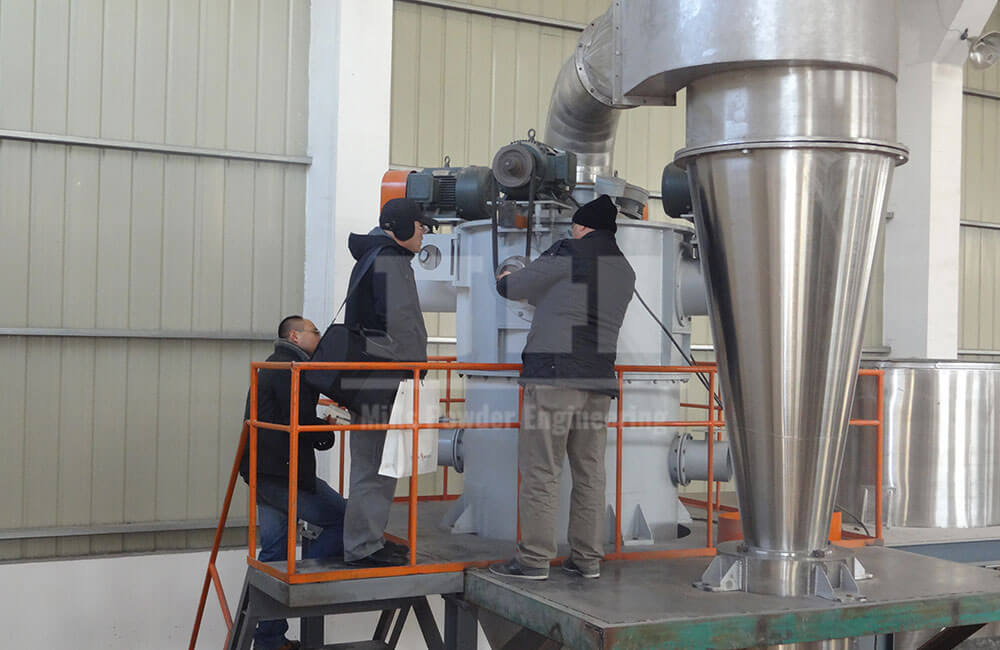
At Mills Powder Engineering, we usually start by testing the actual material on our pilot line — measuring its flow, density, and classification response.
Then we design the system around the target particle size, purity level, and energy goals.
My advice is simple:
“Start with your powder. The right classifier will follow.”
How Mills Powder Engineering Helps Customers Choose Smarter
Our role isn’t just to sell machines — it’s to help customers find the most stable, efficient setup for their production.
We support our clients through:
- Material testing and pilot trials before purchase.
- Custom classifier wheel design optimized through CFD airflow simulation.
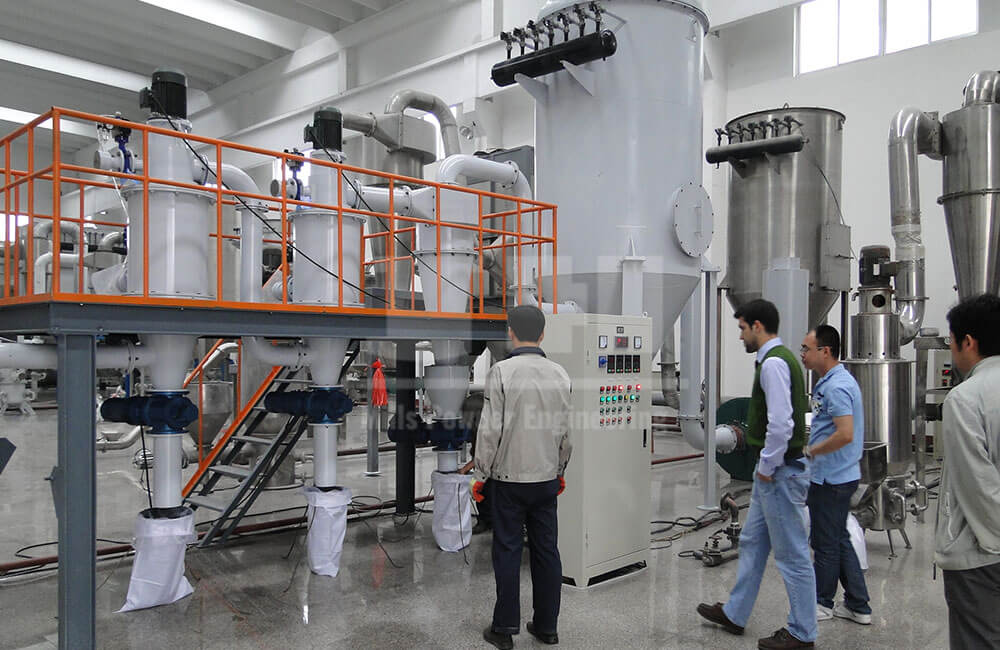
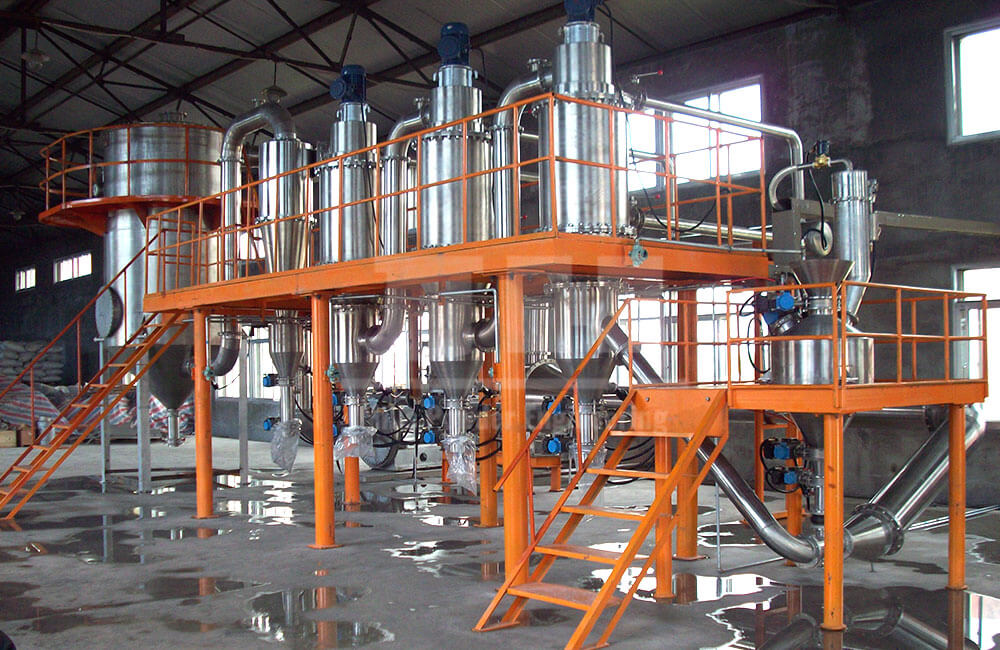
- Integrated system solutions — jet mill + classifier + cyclone + dust collector.
- Different material options (316L, ceramic, polymer coatings).
- On-site training and technical support for stable operation.
“Choosing the right classifier doesn’t just mean better powder — it means lower energy costs, fewer shutdowns, and long-term stability.”
Conclusion
If the jet mill is the heart of your powder system, the air classifier is its brain.
It decides how fine your product is, how stable your line runs, and how efficient your process can be.
When customers ask me how to choose, my answer is always the same:
“Focus on your material, your target size, and your priorities — the rest is what we can help you figure out.”
At Mills Powder Engineering, we combine years of industry experience with advanced engineering support to deliver cleaner, more consistent, and more efficient classification systems.
📩 Email: michael@millspowder.com
🌐 Website: https://www.millspowder.com
Mills Powder Engineering — Reliable Systems, Trusted Results.